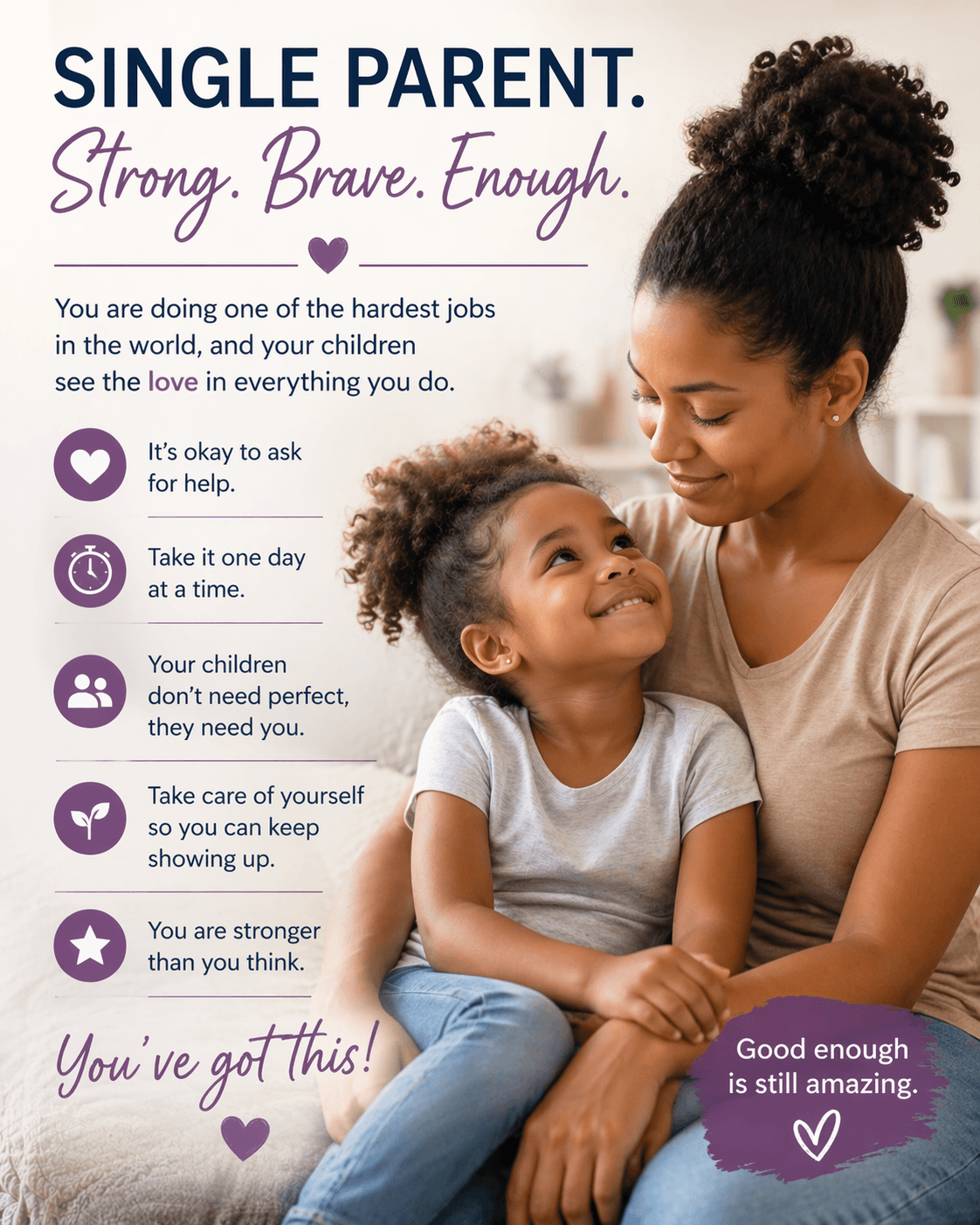
Single parenthood is a journey filled with both deep love and real challenges. Whether you arrived here through divorce, separation, loss, or personal choice, raising children on your own requires strength, resilience, and constant adaptability. While it can feel overwhelming at times, single parent families are also incredibly capable, connected, and strong.
The Reality of Single Parenting
Being a single parent often means wearing multiple hats—provider, caregiver, disciplinarian, emotional support, and everything in between. There’s no one to “tap in” when you’re exhausted, and the responsibility can feel heavy.
Common challenges include:
- Financial pressure
- Time management and burnout
- Making decisions alone
- Navigating co-parenting (in some situations)
- Feeling guilt or worry about your children
These challenges are real—but they do not define your ability to raise healthy, thriving children.
The Emotional Impact on Parents
Many single parents experience a mix of emotions:
- Guilt (“Am I doing enough?”)
- Stress from balancing responsibilities
- Loneliness without a partner to share the load
- Self-doubt about decisions
It’s important to recognize that these feelings are normal. You are carrying a lot—and acknowledging that is not weakness, it’s awareness.
The Strengths of Single Parent Families
While the challenges are often highlighted, there are also powerful strengths that come from single parent households:
- Strong parent-child bonds
- Increased independence in children
- Clear structure and consistency
- Deep emotional resilience
Children raised in single parent homes can thrive when they feel safe, loved, and supported.
Practical Ways to Manage Single Parent Life
1. Let Go of Perfection
There is no “perfect” parent—focus on being consistent and present rather than flawless.
2. Create Structure and Routine
Predictable routines help children feel secure and reduce daily stress.
3. Build a Support System
Friends, family, school staff, or even community resources can help lighten the load. You don’t have to do everything alone.
4. Prioritize Self-Care (Even in Small Ways)
Taking care of yourself is not selfish—it allows you to show up more effectively for your children.
5. Focus on What You Can Control
Especially in co-parenting situations, focusing on your own actions and environment can reduce stress and conflict.
Co-Parenting Considerations (When Applicable)
If another parent is involved, maintaining a child-focused approach is key:
- Avoid placing children in the middle
- Keep communication respectful and direct
- Stay consistent with expectations in your home
- Do not rely on children to carry messages
Even in high-conflict situations, protecting your child’s emotional well-being should remain the priority.
When to Seek Support
Single parenting can feel isolating, but you don’t have to navigate it alone. Therapy can provide:
- Emotional support and validation
- Parenting strategies
- Tools for managing stress and burnout
- Guidance for co-parenting challenges
Seeking help is a sign of strength—not failure.
A Final Thought
Single parenting is not about doing everything perfectly—it’s about showing up, day after day, with love, consistency, and commitment.
You may feel stretched thin at times, but your presence, your effort, and your care are what matter most. Your children don’t need perfection—they need you.